CEO's shareholder's letter
Dear Shareholders,
Greetings, I am Ho Sung Song, President and CEO of Kia.
80 Years of Kia, A History of Challenge and Endeavor
Over the past 80 years, Kia has continuously evolved since its foundation in 1944 through constant technological innovation and industrial transformation, overcoming multiple crises. Throughout this period, we have faced significant challenges including the Asian Financial Crisis, Global Financial Crisis and pandemics. However, we have strengthened our competitive edge by turning crises into opportunities through operational efficiency, product innovation, and strategic investment. Since 2021, under the motto “Total Transformation,” Kia has pursued a comprehensive transformation into a global leading brand through product innovation, operational excellence and brand relaunch representing a business-wide paradigm shift.
As a result, Kia has achieved a brand value of $8.5 billion in Interbrand's Best Global Brands 2025, a 40% increase from 2021, while ranking 1st in profitability among global mass-market OEMs for the past five years. This demonstrates the success of Kia's innovation strategy.
Despite ongoing uncertainties at home and abroad, we have remained steadfast in pursuing three strategic initiatives—accelerating electrification, expanding the PBV business and promoting qualitative growth with a focus on profitability—which stem from Kia’s brand DNA, forged over decades through a history of challenge and endeavor.
Record-High Sales and KRW 100 trillion Revenue for Two Consecutive Years
In 2025, the global automotive industry faced complex challenges including rising costs due to U.S. tariff impacts and intensified competition, as well as global expansion by Chinese OEMs leveraging price competitiveness. Nevertheless, Kia has achieved meaningful results by responding to increasing global eco-friendly vehicle demand, particularly strong demand for hybrids in the U.S. and EVs in Europe. Through reinforced product competitiveness and an expanded product portfolio ranging from hybrids to mass-market EVs, Kia marked record wholesale sales of 3.14 million units.
Furthermore, qualitative growth driven by diversified powertrains, enhanced added value of products and increased market share in high-added value segments such as SUVs and green cars has pushed 2025 revenue to KRW 114.1 trillion, up 6.2% YoY surpassing the KRW 100 trillion-level milestone for two consecutive years. In terms of profitability, despite a majority of OEMs facing sharp declines due to industry cycle normalization and tariff headwinds, Kia has maintained solid fundamentals with an operating profit of KRW 9.1 trillion and an operating margin of 8.0%.
In 2026, we plan to accelerate SUV and hybrid-focused sales growth in the U.S. through the introduction of next-generation Telluride and Seltos alongside an expanded hybrid lineup, while solidifying our EV leadership in Europe by launching the EV2 and completing a mass-market EV lineup ranging from the EV2 to EV5. Across key markets including India where the new Seltos targets premium SUV consumers to strengthen market dominance, Kia has set a global sales target of 3.35 million units, up 214 thousand units YoY. In spite of intensifying global competition and external uncertainties, Kia is revising its 2026 targets upward to an operating profit of KRW 10.2 trillion and an operating margin of 8.3% reflecting our commitment to deliver industry-leading profitability and company value grounded in fundamental business competitiveness, regardless of industry cycles.
Bridging the EV Chasm with Strategies for EV Mass Adoption
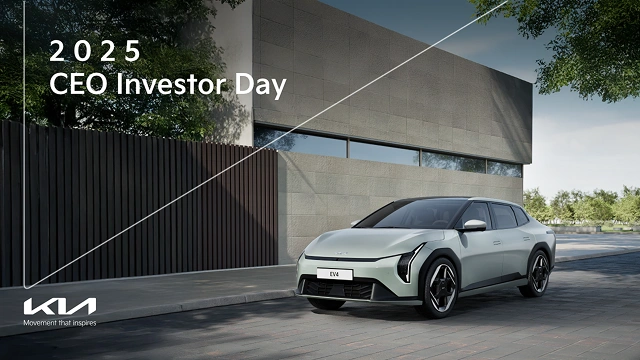
The recent slowdown in EV adoption has raised concerns about a widening EV chasm. Kia will drive the mainstreaming of EVs by delivering the value customers truly seek, focusing on three priorities: product enhancement, improved accessibility, and supply chain optimization. We aim to strengthen our leadership in the EV market with a full lineup of mass-market models beginning with the EV3 in 2024, followed by the EV4 and EV5 in 2025, and culminating with the EV2 in 2026.
First, we plan to expand our EV lineup to 13 models by 2030 to meet diverse customer needs and strengthen our competitiveness in the EV market through product innovation.
Second, we will expand charging infrastructure, including ultra-fast chargers, and improve accessibility through customer experience solutions such as the Kia OneApp and Plug & Charge 2.0 to make EVs more accessible to everyday customers.
Third, we aim to optimize our EV supply chain by diversifying our manufacturing footprint beyond AutoLands in Korea—the global hub for EV development and production—across Europe, the U.S., and emerging markets to meet the needs of each market.
Building on Kia’s EV strategies that span everything from product innovation to supply chain optimization, we will drive EVs into the mainstream by securing market dominance in EV sales.
PBV: A New Business Platform for Future Growth
To address chronic issues in the current LCV market, Kia is developing innovative PBV models with minimum conversion costs enabled by a flexible production system and offering donor models to eliminate inefficient and environmentally harmful processes such as removing the interior parts. With this approach, Kia is reflecting diverse customer needs more effectively and enhancing convenience while delivering customer- and human-centered value through the integration of robotics and AI.
PBVs are a customizable platform that tailors both space and software to customer needs across passenger transport, logistics, retail, and leisure. We aim to expand the lineup beginning with the PV5 in 2025, followed by the PV7 in 2027, and the PV9 in 2029. To support this, Kia completed the Hwaseong EVO Plant East for PV5 production and plans to construct the EVO Plant West by 2027 to manufacture the PV7. Furthermore, we will create a PBV ecosystem where we collaborate with partners through the PBV Conversion Center to produce specialized conversion models such as open-bed trucks, box trucks, and camper vans, thereby boosting industry competitiveness and promoting shared growth across the ecosystem.
Evolving Into an Intelligent Mobility Solutions Provider
The automotive industry is witnessing a rapid paradigm shift from hardware to intelligent, software-driven mobility. Customers accustomed to digital experiences now see vehicles as mobile smart devices and have higher expectations for features such as connectivity and autonomous driving.
Kia is implementing its roadmap toward Software-Defined Vehicles (SDVs), prioritizing the digitalization of customer experience in its product strategy. Kia plans to introduce next-generation SDVs by 2027 that integrate hardware and software by combining AI-powered UX and connectivity and then apply these technologies to mass-production models. As autonomous driving is a core pillar of SDVs, Kia is stepping up its efforts to develop key technologies in-house by progressively building core capabilities in collaboration with Motional and 42dot.
The convergence of mobility and AI robotics—an emerging megatrend in the industry—is an area where Hyundai Motor Group, including Kia, has focused its capabilities for years. Leveraging industry-leading physical AI technologies, Kia aims to help with tasks that are difficult or dangerous for humans to perform across areas such as manufacturing, sales, and logistics, while expanding broad-based partnerships with leading global AI companies to build a human-centered physical AI ecosystem.
A Shifting Global Landscape: An Opportunity for Kia
As geopolitical uncertainties are prolonged, protectionism will continue to intensify and persist. Led by U.S. tariff policy, the global trade order is also being reshaped. While the burden on the industry has been somewhat alleviated due to the temporary postponement of emissions and fuel efficiency regulations, our objective of transitioning to eco-friendly vehicles remains unchanged. These changes have to be overcome not only by Kia, as a global business entity, but also by the entire industry.
Kia has consistently transformed external changes into opportunities to expand its market dominance. During the COVID-19 pandemic, while the entire automotive industry faced sales disruption due to major supply chain constraints, Kia expanded its market share through a diversified product portfolio, a flexible global production network, and swift supply chain adjustments. Furthermore, even amidst U.S. tariff risks, we created market opportunities by expanding local investments and strategically introducing HEV models, which are increasingly preferred by customers. Likewise, upcoming geopolitical shifts and regulatory barriers will also serve as opportunities for Kia to expand its relative market position, leveraging its competitive eco-friendly models and its capabilities in flexible business and production system restructuring.
Quality is the cornerstone of creating and preserving customer value. At Kia, we deeply understand the paramount importance of safety and quality in every vehicle. Kia will pursue uncompromising perfection in safety and quality and strive to become the most reliable partner until the very end of the customer’s journey.
Growth in Corporate Value Based on Market Trust
Kia’s remarkable business performance was made possible by the trust of our shareholders, and our management team prioritizes protecting and enhancing your interests. To this end, through our Value-Up program, we have steadily increased the dividend per share, expanding the 2025 dividend to KRW 6,800. Furthermore, we are fulfilling our commitment to achieve a Total Shareholder Return (TSR) ratio of over 35% for the period of 2025-2027.
Shareholders are both the owners of our company and supporters who drive our growth through transformation and innovation. Kia will partner with its shareholders in the implementation of its long-term growth roadmap and will consistently provide appropriate shareholder returns commensurate with its corporate value growth.
Amidst the structural transformation of the global automotive industry, Kia will lead the paradigm shift in future mobility by embracing this not as a crisis, but as an opportunity to redefine its business model and corporate value. We will continue to meet shareholders’ expectations and achieve further growth by prioritizing customer-centric innovation, profitability-based growth, responsible management, and fostering trust with shareholders. Once again, we appreciate your enduring trust and support throughout our journey.
March 2026
Sincerely,
Ho Sung Song
President & CEO
Kia Corporation
